Culvert Outlet Protection and Erosion Control in Fort Wayne, IN
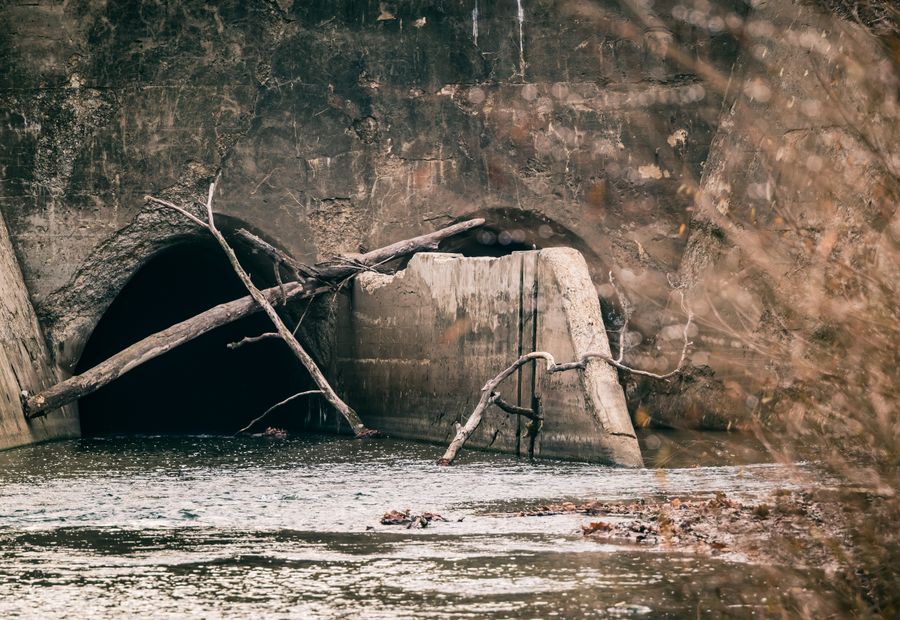
Fort Wayne Culvert Company armors culvert outlets and controls ditch erosion across Allen County, Indiana, alongside driveway culvert installation, replacement, repair, farm entrances, approach grading, creek crossings, and commercial culvert work. We work roadside ditches, farm lanes, and subdivision swales around Fort Wayne, New Haven, Hoagland, Huntertown, and Monroeville.
Outlet work uses angular riprap and rock rundowns sized to the flow, set on non-woven geotextile fabric, with erosion control blanket and seed on the reshaped slopes above and below. The whole point is to take the energy out of the water before it reaches soil. A pipe discharging onto bare clay is a pipe digging its own grave, and the repair afterward costs many times what the rock would have. This is the smallest line on a culvert quote and the one most often deleted from it.
Scour and the Hole That Travels
Flow accelerates through a barrel and arrives at the outlet moving faster than the ditch can absorb. It digs a plunge hole. That hole works backward toward the pipe, undermines the last few feet of it, and the end drops. At that point you are not buying rock any more. You are buying a rebuilt pipe end.
Rock That Stays Where You Put It
Angular stone, sized to the flow, on fabric, keyed into the ditch rather than piled on top of it. The apron spreads water sideways and slows it down before it touches soil. Where the drop is steep, a rundown carries the flow to the ditch bottom in a controlled line instead of a free fall.
Inlets, Ditches, and Slopes
The upstream end erodes too. An inlet that is undercutting loses the fill around it the same way an outlet does. We shape the ditch above and below the pipe so the flow arrives straight and leaves straight, then hold the new slopes with blanket and seed until grass takes them.
Shoulders and Sediment
A slumped driveway shoulder gets rebuilt with compacted material and a real end treatment. A bare approach that keeps washing silt into the ditch gets surfaced, because that silt is what plugs the next pipe downstream. Call (260) 529-7484.
Why is there a hole at the end of my culvert?
Water leaves a pipe faster than it travels in an open ditch, and it lands on whatever sits at the outlet. Bare clay cannot take that, so it digs. Once the hole exists it deepens and works upstream toward the pipe, and eventually the last section of barrel is hanging over nothing. Rock at the outlet spreads the flow before it can start, which is why it is worth a few hundred dollars on a job that costs thousands.
Can I use round river rock at the outlet?
It looks right and it does not work. Round stone has no faces to lock against its neighbours, so moving water rolls it downstream and you are back to bare soil with a rock pile below it. Angular quarried stone keys together and stays put. Size matters as much as shape, because rock too small for the flow washes out and rock too large leaves gaps that let water reach the soil underneath.
Why does fabric go under the rock?
To keep the rock and the soil from becoming one thing. Without a separation layer the stone works down into the clay under traffic and flow, and the clay works up between the stones. Inside a few years you have a muddy rock patch that neither drains nor armors. Non-woven geotextile fabric under the stone keeps each layer doing its own job, and it is a small share of the cost.
My driveway shoulder is sliding into the ditch. Can that be fixed without redoing the culvert?
Often yes, if the pipe itself is sound and on grade. A slumping shoulder usually means the ditch slope was cut too steep, or the end of the pipe lost its fill because there was no end treatment holding it. We rebuild the slope with compacted material, fit or reset a proper end, and hold the new face with rock or blanket and seed. If the slump is being fed by water escaping the pipe, that gets closed first.