Culvert Replacement in Fort Wayne, IN
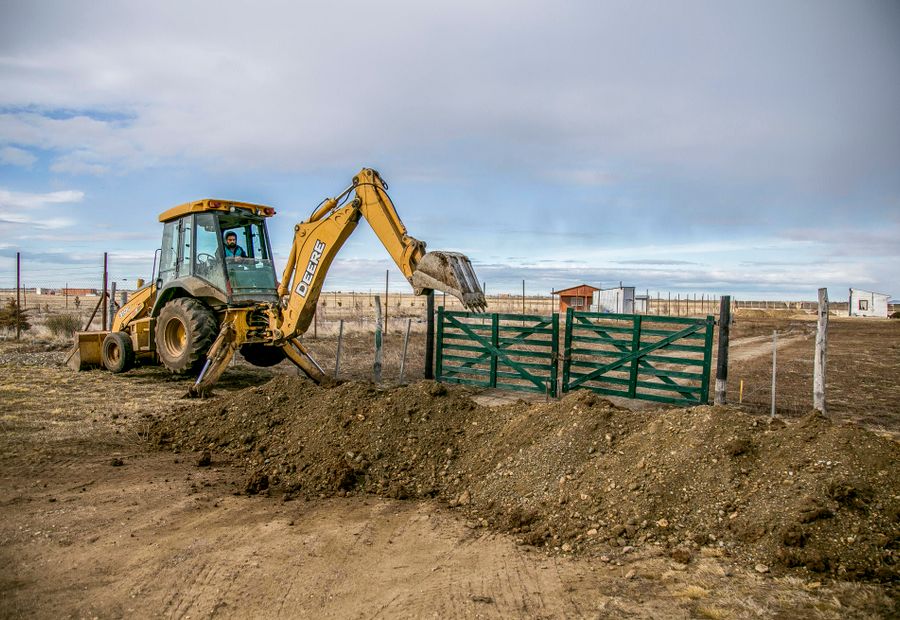
Fort Wayne Culvert Company replaces failed driveway and field entrance culverts across Allen County, Indiana, and we also install new entrances, repair sound pipe, grade approaches, build creek crossings, protect outlets, and handle commercial culvert work. Our customers own acreages, farms, and rural houses in Fort Wayne, Monroeville, Hoagland, Leo-Cedarville, and Churubusco.
Most of what comes out of the ground here is Contech HEL-COR galvanized corrugated metal, because that is what went under these entrances for decades. What goes back in is usually ADS N-12 dual wall HDPE on a shaped granular bed, or aluminized Type 2 metal where the soil and the water are hard on plain galvanizing. The new barrel gets set on the ditch flow line with a corrected invert, not simply dropped into the hole the old one left. Structural backfill goes in on both sides in lifts. That last detail is what a same-price replacement usually skips, and a pipe backfilled hard on one side and loose on the other deforms sideways before a truck ever crosses it.
Four Reasons a Pipe Is Finished
The invert has rusted through, so the floor is gone while the ends look sound. The barrel is crushed and out of round from too little cover under wheel loads. The joints have pulled apart and soil is washing into the gap. Or the pipe was undersized from the day it went in, which the ditch proves every spring by running over the top of the driveway.
What Happens to the Driveway That Day
The entrance opens up. We pull the old pipe, cut the trench to the depth the new invert needs, shape the floor, bed it, and set the pipe. Then backfill, ends, cover, and rock at the outlet. A normal residential entrance goes back together the same day. We keep the approach passable where the site allows it and tell you straight when it will not.
Upsizing and the Permit
A replacement is the natural moment to correct a pipe that was always too small. The road authority sets the diameter as part of approving the work, so we measure the ditch, apply, and build to what comes back. A bigger pipe usually needs more cover, and that can lift the entrance a little.
Booking
Late fall is a real deadline on this work, because frozen ground stops trenching and stops compaction. A pipe that should come out before winter has a date on it. Call (260) 529-7484.
How do I know whether my culvert needs replacing or repairing?
Look at the floor of the pipe, not the ends. Old metal rusts from the invert up, so a barrel with a hole in the bottom can look perfect from the driveway. Four things put a pipe past repair: the invert is gone, the barrel is crushed out of round, the joints have pulled apart, or the pipe was always too small for the ditch. Everything else is usually a repair, and a plugged pipe is almost always just a cleanout.
Will my driveway be closed while you replace the culvert?
For part of one day, yes. The trench crosses the entrance, so there is a window where nothing drives over it. On a normal residential entrance we open, swap, backfill, and rock the same day, and you are driving on it that evening. If you have livestock, a delivery, or somebody who has to get out, tell us when we schedule and we work the timing around it.
Can you reuse the old pipe or the old end sections?
Sometimes the end sections, rarely the pipe. If a flared end came off a pipe that was otherwise fine, it can go back on the new barrel as long as it matches the diameter and it is not bent up. The pipe itself is a different story. Anything with a rusted floor, a flattened crown, or split seams goes on the trailer. We haul the old pipe off and it is included in the price rather than left in your fence row.
Can you make the new culvert bigger than the old one?
Often that is exactly why we are there, and it is the right call when the ditch has been telling you so for years. It is not our decision alone though. The road authority sets the diameter as part of approving the entrance, and a larger pipe also needs more cover over it, which can mean lifting the driveway. We measure the ditch, put the case in the application, and build what the permit comes back with.