Farm and Field Entrance Culverts in Fort Wayne, IN
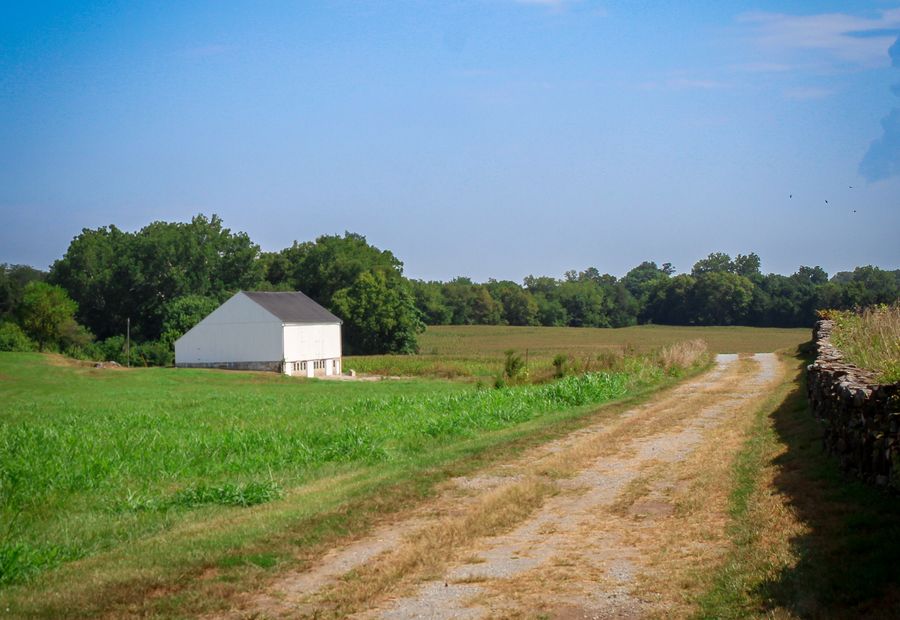
Fort Wayne Culvert Company builds farm and field entrances across Allen, Whitley, and DeKalb counties, Indiana, and also handles driveway culvert installation, replacement, repair, approach grading, creek crossings, outlet protection, and commercial work. We work for grain and livestock operations, hobby farms, and landowners around Fort Wayne, Monroeville, Hoagland, Woodburn, and Grabill.
Field entrances get Prinsco Goldflo dual wall HDPE where the cover depth allows it and reinforced concrete pipe where loaded axles run daily or the cover is thin. Both go on shaped granular bedding with compacted lifts up each side. What changes on a farm entrance is the arithmetic above the pipe. A residential drive wants about a foot of compacted cover. A lane that a loaded grain truck or a concrete truck uses wants more, and it wants it compacted properly rather than dumped and driven flat. A crushed pipe under a field gate almost always turns out to be a cover problem, not a pipe problem.
Width Sets the Pipe Length
Equipment has to swing off the road and into the lane without a wheel finding the ditch. The throat gets built for the widest thing that uses it, and a wider throat needs a longer barrel underneath. That length, not the diameter, is usually the biggest line on a field entrance quote.
Gates, Sight Lines, and Multiple Entrances
A gate set right at the road forces a truck to stop on the pavement while somebody opens it. Setting it back off the right-of-way gives the rig somewhere to pull clear. Where a field has more than one access, we look at which ones earn their keep, because the county has a view on how many entrances a parcel gets and where sight distance allows them.
Tile Outlets in the Ditch
This is drained ground, and it works because somebody tiled it. Tile lines outlet into these road ditches, which means the ditch runs longer than the rain does. That water counts when we size the pipe. The outlet itself stays above the flow line and stays open.
Booking Around the Calendar
Nothing gets dug during planting or harvest. Dry ditches in late summer are the best conditions this work gets. Call (260) 529-7484 and we will pick a window that does not cost you a field.
How wide does a field entrance need to be?
Wide enough that the equipment can turn into it off the road without dropping a wheel in the ditch. A combine head and a loaded grain truck both need more throat than a car, and the turning radius off a narrow county road is what usually sets the number rather than the machine itself. Wider throat means longer pipe, so the entrance width drives the material cost more than the pipe diameter does.
What pipe do you use under a farm entrance?
It depends on the traffic and the cover available. Dual wall HDPE handles most field lanes when it gets the cover it needs. Reinforced concrete pipe goes in where loaded axles run daily or where the entrance is shallow and the cover is thin, because concrete carries the load itself rather than leaning on the soil packed around it. We size the pipe to the ditch either way, then pick the material for what drives over it.
Can you work around planting and harvest?
That is how we schedule it. A field access does not get dug shut in the middle of either one, so the work goes in the windows between them, or in late summer once the ditch is dry and the ground will hold a machine. Tell us your rotation and which entrance is the one you cannot lose, and we build the sequence around it.
My tile line outlets into the road ditch. Does that change the culvert?
It changes what the ditch carries and where the outlet has to sit. A tile discharging above your entrance means the ditch runs longer and later than rainfall alone would explain, and the pipe gets sized for that. The tile outlet itself has to stay above the flow line and stay clear, so we protect it rather than bury it. Getting at roadside drainage tile in the right-of-way needs a county permit, and we confirm that before touching one.