Driveway Culvert Installation in Fort Wayne, IN
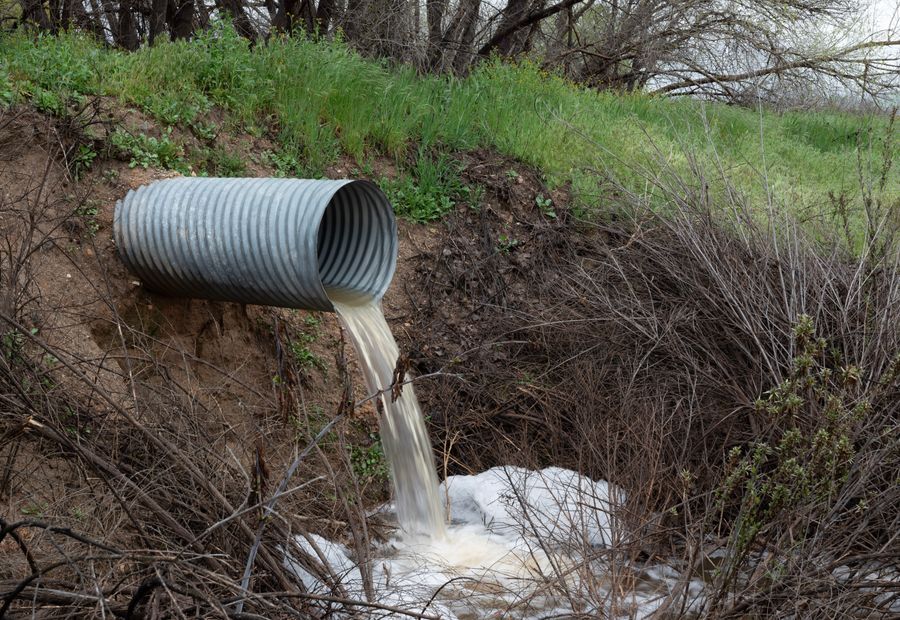
Fort Wayne Culvert Company is an excavating contractor installing driveway culverts, replacing failed pipe, repairing plugged and washed out pipe, building farm and field entrances, grading driveway approaches, setting creek crossings, armoring outlets, and running commercial culvert work. We serve acreages, farms, gravel-road homes, and subdivision lots across Fort Wayne, New Haven, Huntertown, Grabill, Woodburn, and Allen County, Indiana.
We set ADS N-12 or Prinsco Goldflo dual wall HDPE on residential entrances, and galvanized or aluminized metal where a county calls for it. The barrel goes on a shaped granular bed so it carries along its full length. Structural backfill goes in on both sides in lifts, compacted the same on the left as on the right. Non-woven geotextile fabric separates that granular material from the native clay so silt never migrates into it. Flared end sections go on both ends and angular rock goes at the outlet. Compare that to a short pipe dropped in an open trench and covered with the dirt that came out of it. The second entrance costs less on the day and gets dug up twice.
The Pipe Is Sized to the Ditch
The only question that decides diameter is how much water that ditch carries in a hard rain. That comes from the acres draining to the point, how steeply they fall, and whether they are row crop, pasture, timber, or roofs and pavement. A short driveway below a big watershed needs a bigger pipe than a long driveway below a small one. Counties set a minimum diameter and a minimum length as well, so the permit can push the number up.
Too Big Is Also Wrong
An oversized pipe sits with its floor below the ditch bottom. Sediment drops out inside it, water stands in the bottom, and cattails take hold. It also wants more cover before anything can drive over it, which raises the whole entrance and drags the approach up with it.
Flow Line, Fall, and Ends
The pipe lays on the ditch flow line, pointed the way the ditch already runs, with a slight steady fall from inlet to outlet. Flat Allen County ground gives you almost no fall to spend, so this is where the job is won. Flared ends widen the opening, guide water in and out, and hold the fill back off the pipe. Deep ditches and steep approaches get poured headwalls instead.
Booking
We measure and permit through the winter and dig once the frost is out. A running ditch moves a date and we say so. (260) 529-7484 reaches a person.
What size culvert do I need for a driveway?
The size comes from the water, not from the driveway. Count the ground draining to that point in the ditch, look at how steeply it falls, and look at what covers it, because row crop, pasture, timber, and pavement all shed at different speeds. Fifteen and eighteen inch pipe handle most residential entrances around here. A bigger watershed above you, or a steeper fall into your ditch, pushes it up from there. Your county also sets a minimum, and we confirm that number before we quote.
How much does it cost to install a driveway culvert?
A new residential entrance usually lands between eighteen hundred and forty five hundred dollars installed, and a replacement runs a little higher because the old pipe has to come out and go somewhere. What moves it: the diameter, how long the pipe has to be, whether it is metal, plastic, or concrete, flared ends versus poured headwalls, how much rock the outlet needs, and how much approach gets rebuilt. The county permit fee is separate and it is small next to any of that.
Do I need a permit to install a driveway culvert?
Yes, on any public road. The road authority that maintains the road issues it, so a county road means the county highway department, a city street means the city, and a state highway means the state. It is usually a short application and a small fee. The road department often sets the pipe diameter and the minimum length as part of approving it. We pull the permit or walk you through it, and we never promise you an approval before they have looked at the site.
How deep should a driveway culvert be buried?
Think in cover rather than depth. Cover is the distance from the top of the pipe up to the surface you drive on, and a residential entrance wants about a foot of it, compacted. An entrance carrying loaded trucks wants more. Depth is not a free choice though, because the pipe also has to sit on the ditch flow line with a steady fall through it. Grade and cover get decided together, and if the two fight, the ditch wins.