Fort Wayne Culvert Company: Driveway Culvert Installation in Fort Wayne, IN
Fort Wayne Culvert Company is an excavating contractor licensed and insured in Indiana, working roadside ditches and rural entrances across Allen County. We do driveway culvert installation, culvert replacement, culvert repair, farm and field entrances, driveway approach and grading, creek and crossing culverts, outlet and erosion protection, and commercial culverts. Our customers own acreages, farms, gravel-road homes, and subdivision lots in Allen, Whitley, and DeKalb counties, Indiana.
We set ADS N-12 dual wall HDPE on a shaped granular bed, backfill in lifts on both sides at once, fit a flared end section to each end of the pipe, and run non-woven geotextile fabric between the granular backfill and the native clay so the two never mix. Then we size the pipe to the ditch. The question is how many acres drain to that point and how fast they fall, not how wide your driveway is. A short pipe dropped in a trench and buried under loose dirt answers a different question. Water finds out which one you paid for during the first hard rain.
Call for a Free Estimate- Licensed and insured in IN
- Pipe sized to what the ditch carries
- Granular bedding and even backfill
- Flared ends and rock at the outlet
- Allen, Whitley, and DeKalb counties
Driveway Culvert Installation
A culvert carries the ditch under your driveway. The ditch keeps running underneath while you cross over it. Everything that matters happens where nobody looks: the size of the pipe, the bed under it, the fall from inlet to outlet, and what holds the ends.
We measure the ditch, count the ground draining to it, and pick a diameter from that. Then we check the county minimum, because the road department sets one and it can be larger than the water calls for. More on driveway culvert installation.
Culvert Replacement
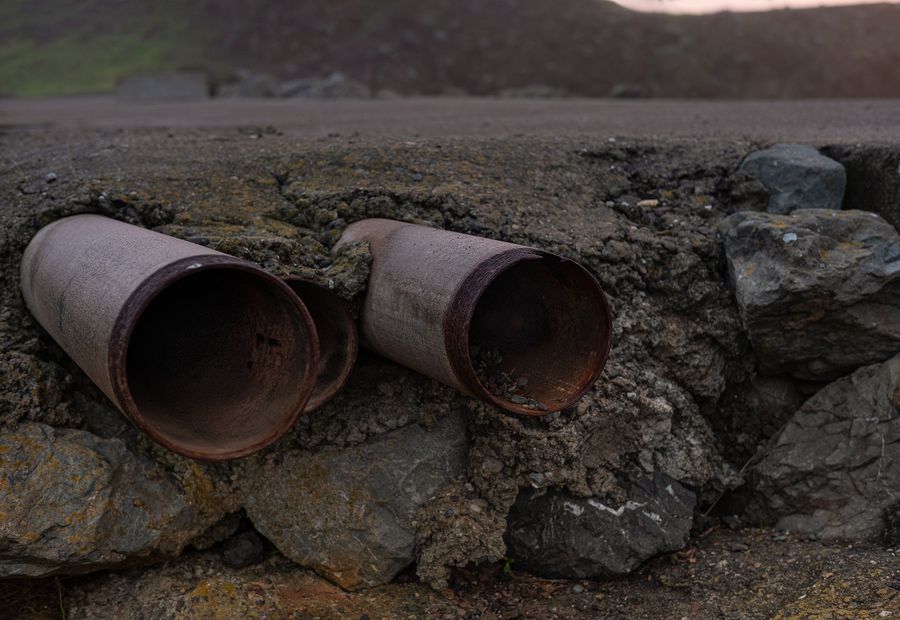
Old metal pipe rusts from the bottom up. The invert goes first, so a pipe with a hole in the floor still looks solid from the end of the driveway. Crushed pipe, pulled joints, and a pipe that was always two sizes small are the other three reasons we replace one.
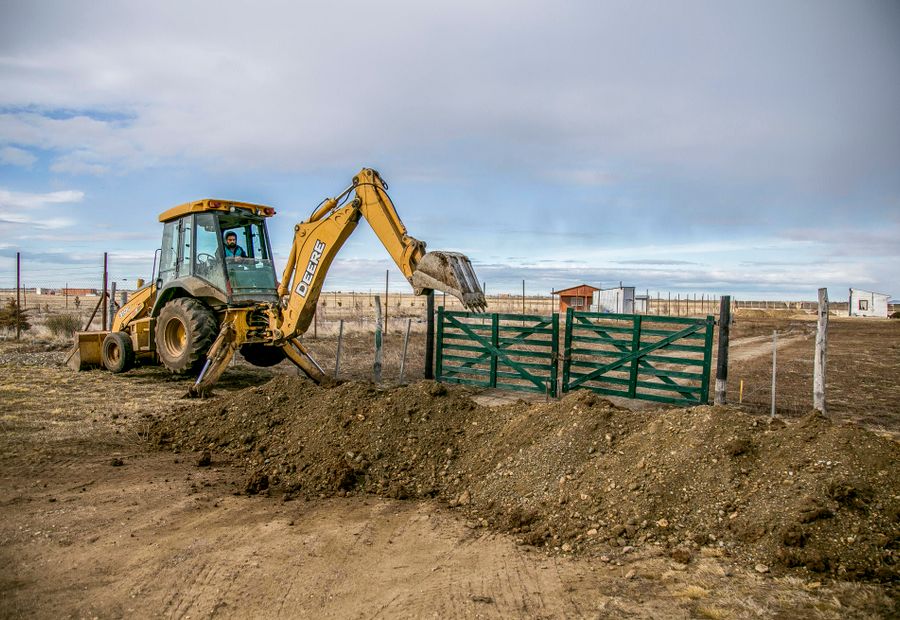
A normal residential entrance comes out and goes back in the same day. We keep the approach passable where we can and tell you plainly when we cannot. More on culvert replacement.
Culvert Repair
Start cheap. A plugged pipe is usually silt, gravel washed off the shoulder, cattails, a root mass, or a beaver dam. Cleaning it out costs a few hundred dollars and it is the first thing anybody should check.
After that comes the middle: rebuilding a washed out end, resetting an end section that blew off, patching a rusted invert, sealing a separated joint, lining a pipe that is otherwise sound, and filling the voids where soil has washed out alongside it. More on culvert repair.
Farm and Field Entrances
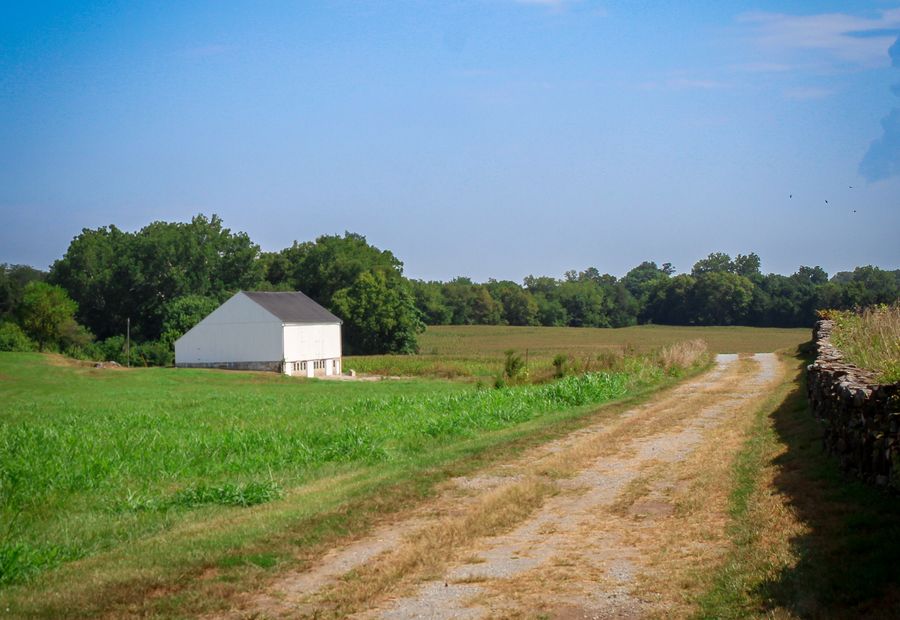
A grain truck needs a wider throat than a car does, and a wider entrance needs a longer pipe. Loaded axles need more cover over the top of that pipe. Those two facts set the whole job, and they are why a field entrance is not a driveway with a bigger number on it.
We work around planting and harvest. Nobody digs an access shut in the middle of either one. More on entrances for farms and fields.
Driveway Approach and Grading
The pipe is half the job. The other half is how the driveway climbs out of the ditch and meets the road. Too much hump and a low car scrapes. Too much dip and you own a puddle. Neither one shows up on an estimate that only prices a pipe.
Behind the road the drive needs a crown or a cross fall, so rain leaves the surface sideways instead of running its whole length down to the culvert. More on driveway approach and grading.
Creek and Crossing Culverts
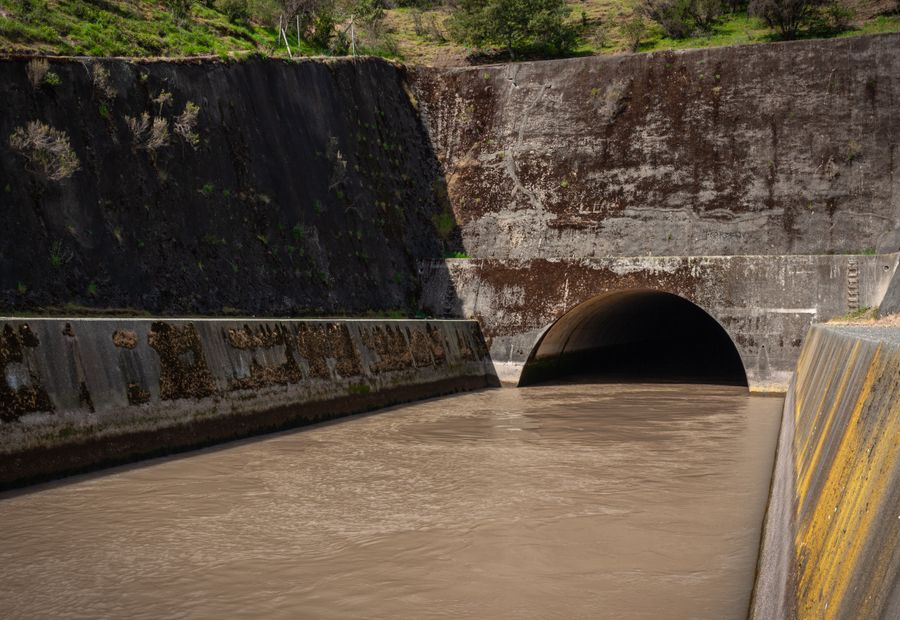
A lane crossing a creek or a wooded draw is a different animal from a roadside entrance. A live stream carries flow all year and rises fast, so the sizing math starts from the stream and not from the ditch. Sometimes the answer is one large pipe. Sometimes it is a box section.
Approvals on a stream crossing go beyond what a roadside entrance needs. We find out which ones apply to your crossing before we hand you a price. More on crossings for creeks and lanes.
Outlet and Erosion Protection
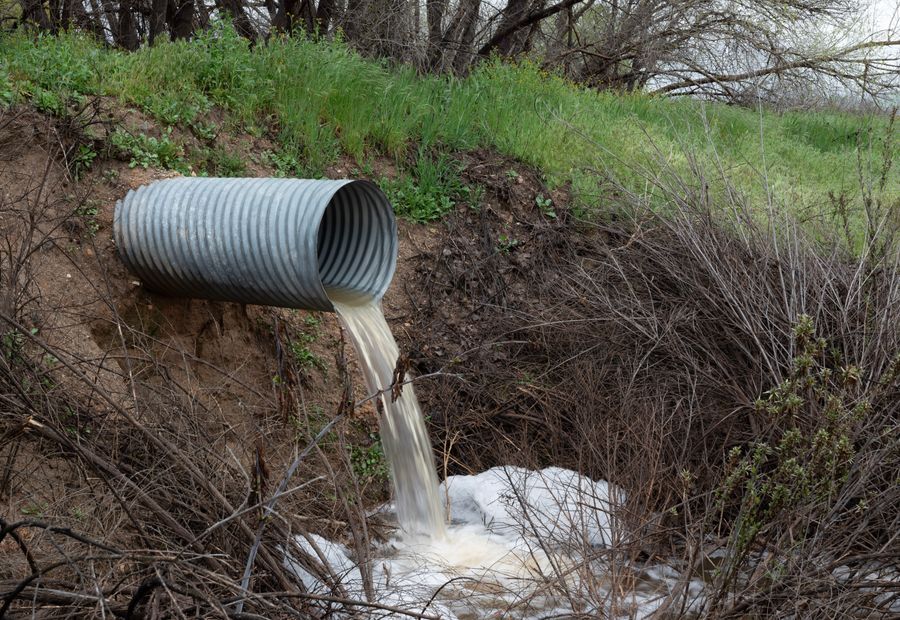
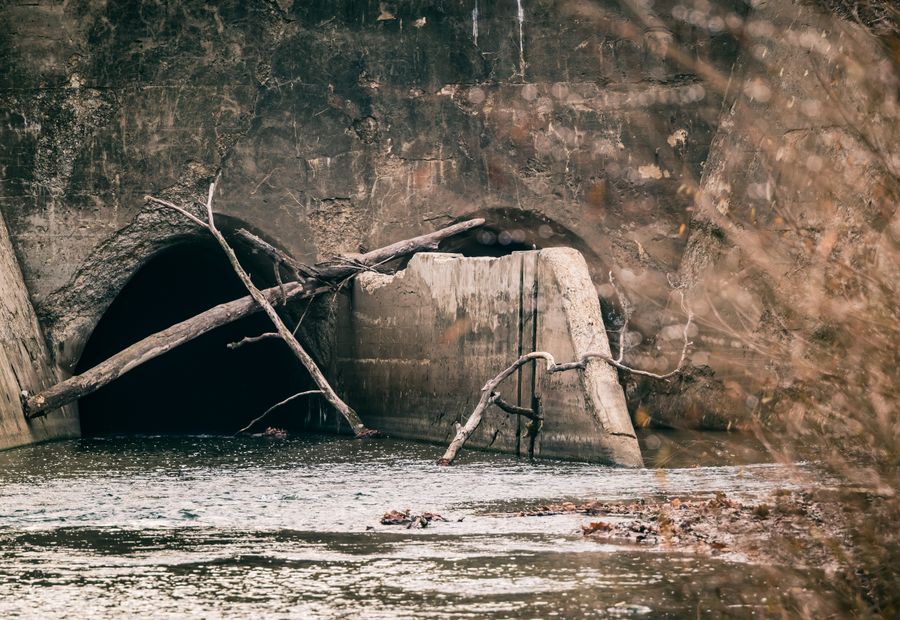
Flow speeds up inside a barrel and arrives at the far end faster than the open ditch below it moves. It lands on whatever is there. Bare clay turns into a hole, the hole works backward under the pipe, and then the end of your culvert is hanging in the air with nothing under it.
Angular rock sized to the flow, set on fabric, spreads that water out before it can dig. It costs a few hundred dollars and it is the cheapest insurance on the whole job. More on outlet armoring and erosion work.
Commercial Culverts
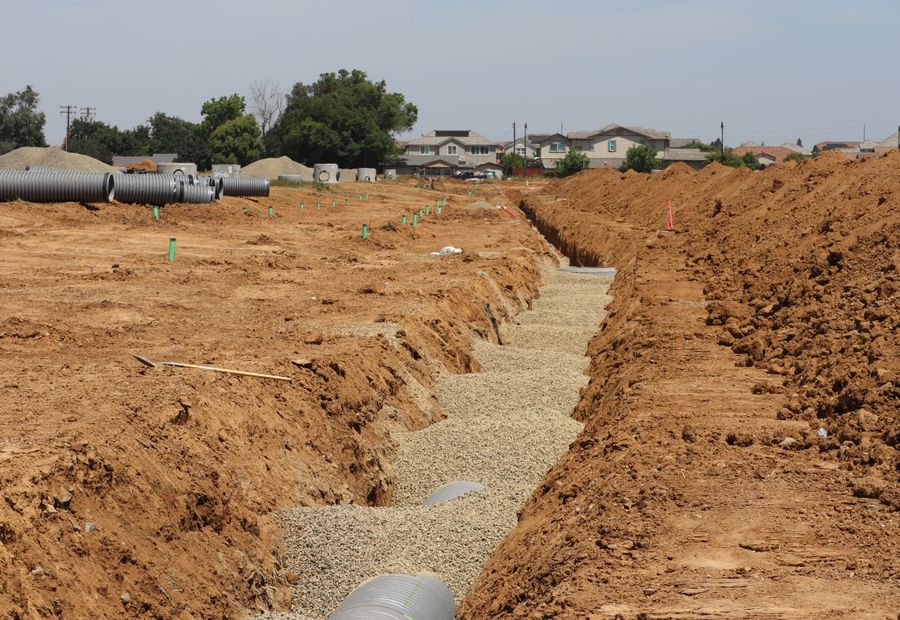
Commercial entrances, subdivision crossings, and private roads run to an engineer's plan. Reinforced concrete pipe and precast box sections carry the loads. Cover depth and bedding get specified rather than judged, and an inspector checks them.
We phase the work so an entrance stays open during business hours, and we send licensing and insurance paperwork to the general contractor before the first machine rolls in. More on commercial culverts.
Why Allen County Property Owners Call Us
- We size the pipe to the ditch, not to the driveway. How much ground drains to that spot, how steeply it falls, and whether it is row crop, pasture, timber, or roofs and pavement. Put a narrow entrance under a large watershed and it needs more pipe than a wide entrance under a small one. See driveway culvert installation.
- Oversizing is its own mistake. An oversized pipe sits with its floor below the ditch bottom. Sediment settles in the bottom of it, water stands there year round, and cattails move in. It also wants more cover before anything drives over it, which lifts the whole entrance. See culvert replacement.
- Nobody ever sees the bedding. We shape the trench floor and lay a granular bed so the pipe bears along its full length instead of on two high spots. Backfill goes in left and right together, in lifts, compacted evenly.
- Culverts die at their ends. Cut a pipe off flush and its end is left bare, with nothing holding the fill against it. Water eats the fill around it and the shoulder slumps. Flared end sections are the standard answer here. See outlet and erosion protection.
- We tell you when the cheap fix is the right fix. Half the pipes we look at are plugged, not failed. Cleaning one out costs a fraction of replacing it. See culvert repair.
- We read your county's rules before a price goes on paper. Parts of this work are handled by county crews in some places. We establish which office maintains your road and what that office keeps for itself, then set out in plain terms where our scope starts and stops.
Why Driveway Culverts Fail
Every culvert page online shows you a pipe. Almost none of them tell you what decides whether that pipe is still working in fifteen years. Here it is.
An Undersized Pipe Takes the Driveway
A small pipe does not back water up politely and wait for you. Water that cannot get through the pipe goes over the driveway. Moving water cuts a channel through a gravel approach in one storm. The next storm makes that channel bigger. Afterward the pipe is usually still sitting there, undamaged. The driveway is gone.
Grade and Alignment Carry the Water
The pipe belongs on the ditch flow line, pointed the same direction the ditch already runs, with a slight steady fall from inlet to outlet. Give it less fall than the ditch has and sediment settles out inside it. Lay it crooked and the water hits the end at an angle, scours the shoulder, and works around the outside of the pipe instead of through the middle. Leave the outlet end sitting high of the ditch bottom and a puddle stays in the barrel permanently. On flat Allen County ground there is almost no fall to spend, so this step matters here more than it does almost anywhere.
Bedding and Even Backfill Keep the Pipe Round
The trench bottom gets shaped, and granular material goes under the pipe so it bears along its whole length. Backfill then goes in on both sides in lifts and gets compacted evenly, left and right together. Compact one flank and neglect the other, and a flexible barrel goes oval sideways with no traffic on it at all.
Cover Is What Lets a Truck Cross It
Cover means the distance from the top of the pipe to the driving surface. Figure roughly a foot of compacted material over a house driveway. A farm entrance a grain truck uses wants more, and so does a commercial one. Short the cover and the barrel takes the wheel load straight onto itself. Flattened pipe comes from exactly that.
Three Materials, Three Tradeoffs
Galvanized corrugated metal is the pipe most existing entrances already have. It is cheap, stiff, takes rough handling, and rusts from the floor up where water and sediment sit. Service life runs a few decades and the soil decides. HDPE dual wall is black plastic, corrugated outside for stiffness and smooth inside for flow. It never corrodes, one machine and one man can set it, and it gets much of its strength from the soil packed around it. Reinforced concrete pipe is heavy and rigid, carries load on its own, lasts the longest of the three, and needs a machine plus tight joints. No material rescues a pipe that is the wrong size.
Frost Works on a Culvert Twice
Ice inside the barrel blocks it, so meltwater in a February thaw runs over the driveway rather than through the pipe. That is the classic spring washout, and the pipe was never the problem. Second, the ground around a shallow pipe freezes and heaves the driveway while the pipe stays put. That is the bump that appears right over the culvert every March. Cover depth, clean granular backfill, and a pipe that drains instead of holding water are the entire answer.
The Four Causes of a Cheap Culvert Failing
They are always the same four. Pipe sized to the price instead of the ditch. No bedding and uneven backfill. Not enough cover for what drives over it. Open ends with nothing at the outlet. Any one of them will finish a pipe. Together they finish it fast.
The Permit, and Who Issues It
Your driveway culvert sits in the road right-of-way. The road authority controls that ground, and it decides three things: whether the entrance is allowed at all, where it goes, and what size pipe goes in it. Work in the right-of-way needs a permit from whoever maintains that road.
That is the whole rule, and the office changes with the road. A county road means the county highway department. In Indiana the county maintains the rural roads, not the township. A street inside a town means the town hall. A state highway means the state, and that is a different office and a longer process. Find out which one you are on before you plan anything, because the answer changes the timeline more than the digging does.
In Allen County the Engineer's Office issues the permits, and those permits cover county roads. A permit is required for a driveway installation, for utility work in the right-of-way, and for getting at roadside drainage tile. The application goes in ahead of construction and the applicant pays the fee. That fee is small and it is separate from our price. We will tell you what it is for your road.
In some places county crews and county material do part of this work. We settle your county's rules ahead of anything else, then state plainly where the line falls between their scope and ours. We do not promise an approval, a start date, or a pipe size before the road department has looked at your site.
Regulated Drains: The Second Approval in Allen County
Here is the part nobody else in this market writes down. Allen County runs a regulated drain system, and the County Surveyor administers it. There are many miles of legal drain in this county. Some ditches along county roads are legal drains and some are ordinary Highway Department side ditches, and the two look identical from the road. Plenty of legal drains do not follow a road at all. They cut across fields and back lots.
If your ditch turns out to be one, the highway permit is not the only approval in play. A regulated drain carries an easement, and on the older rural drains that easement is a wide strip on each side of the channel, measured outward from the top of the bank. It is far wider than most owners assume, so a good deal of what looks like private yard sits inside it. Nothing permanent goes in that strip without the Drainage Board's consent, and the county names driveways outright among the structures that need it. Connecting a new pipe into a regulated drain needs the same consent. That is a second office, a second process, and a real reason a project stalls after somebody already bought pipe.
One more thing worth knowing if you live in a platted subdivision. The drainage swale between the lots is maintained by the property owner, not by the county. Owners find that out the year the swale stops working.
We check whether your ditch is a regulated drain before we quote. It costs you nothing and it takes one look at the county drain map. Nobody wants to find out afterward.
How a Culvert Job Runs
Look at the Ditch
We stand in the ditch and read it. Which way it runs, how deep it is, how much ground drains to that point, and what the water did the last time it was full. High water marks tell the truth.
Check the Road and the Drain
We find out who maintains your road and whether that ditch is a regulated drain. Both answers change what you can build and who has to say yes to it.
Size, Quote, and Permit
Diameter, length, material, end treatment, and outlet rock go in a written price. Then the application goes in and we build to what the permit says, not to what the estimate guessed.
Dig, Bed, and Lay
The old pipe comes out. We shape the trench floor, lay granular bedding, and set the new pipe on the ditch flow line with a steady fall from the inlet end to the outlet end.
Backfill, End, and Rock
Backfill goes in on both sides in lifts. End sections go on. Rock goes at the outlet on fabric. Then we build the approach back up and grade it so water leaves the driveway.
What a Driveway Culvert Costs Around Fort Wayne
Six things move this number: the diameter of the pipe, how long it has to be, whether it is metal, plastic, or concrete, what goes on the ends, how much rock the outlet needs, and how much of the approach gets rebuilt. Pulling an old pipe out first adds to it. So does a deep ditch, because a deep ditch means a deep trench.
| Work | Typical Range | Notes |
|---|---|---|
| Clean out a plugged culvert | $250 - $700 | Silt, gravel, cattails, or a beaver dam. Check this first |
| Reset or replace a blown off end section | $400 - $1,200 | Metal or plastic flared end, plus the fill around it |
| Riprap at the outlet | $400 - $1,100 | Angular rock on non-woven fabric. Cheapest part of the job |
| Rebuild a washed out pipe end | $700 - $2,000 | Excavate, rebuild the shoulder, new end treatment, rock |
| New residential driveway culvert | $1,800 - $4,500 | Pipe, bedding, flared ends, backfill, and the approach |
| Replace an existing driveway culvert | $2,200 - $5,500 | Old pipe out and hauled off, new pipe on a corrected grade |
| Farm or field entrance | $3,500 - $9,000 | Longer pipe, heavier material, more cover for loaded axles |
| Poured headwall, per end | $1,200 - $3,500 | Deep ditches, steep approaches, long pipes, hard driveway edges |
A fifteen inch pipe on a shallow ditch with a short entrance lands near the bottom of these numbers. A wide farm entrance with concrete pipe, headwalls, and a rebuilt approach lands above the top of them. The county permit fee is separate and it is small next to any line in that table.
What moves the price most:
- Pipe diameter, which the ditch decides and the county confirms
- Pipe length, which the width of the entrance decides
- Material, since concrete costs more than plastic and needs a machine
- Flared end sections versus poured headwalls and wingwalls
- Ditch depth, because it sets how much dirt moves
- Whether an old pipe has to come out and go somewhere
- How much approach gets rebuilt behind the road
Frequently Asked Questions
Who owns the ditch in front of my house?
Start with the physical answer. The ditch along a public road normally sits inside the road right-of-way, and the road authority controls that strip even where your property line runs out past it. That is exactly why a permit exists for work there. Who maintains it depends on the road: the county, the city, or the state. Where your line actually falls is a question for your deed and the county map, not for a contractor.
Can I install a culvert myself?
Physically yes, on a small pipe, if you can get a machine to it. The permit still applies though, the road authority still sets the size, and an entrance built without approval can be ordered back out at your cost. Three things go wrong on owner installs almost every time: no granular bedding under the pipe, not enough cover over it, and nothing at the outlet to stop the scour.
How long does a driveway culvert last?
Galvanized metal runs a few decades and rusts out at the floor before anywhere else. HDPE does not corrode at all, so it beats metal in wet or sour ground. Reinforced concrete outlives both. Material is only half of it though. The pipes that die young are the ones that were too small or badly bedded, and that is true whatever they were made of.
Why does my driveway wash out every spring?
Water went over the top instead of through the pipe. Either the culvert is too small for what the ditch carries, or it is plugged, or it is full of ice during a thaw while meltwater is still arriving. Moving water cuts a gravel approach fast. A driveway that runs rain down its own length instead of shedding it sideways feeds the problem from the other direction.
Is my roadside ditch a regulated drain?
It might be, and in Allen County that is a real question rather than a technical one. Some ditches along county roads are legal drains under the County Surveyor and some are ordinary highway side ditches, and you cannot tell them apart by looking. If yours is a legal drain, the Drainage Board has to consent before a driveway goes inside the easement. We check the county's drain map before anyone digs.
Do you work in winter?
We measure, size, and permit through the winter and dig once the ground opens. Frozen ground stops trenching and it stops compaction, and backfill that is not compacted properly lets the pipe deform later. Winter is the right season to get the ditch measured and the permit in hand, because then the machine shows up the week the frost leaves.
How many days will my entrance be torn up?
A normal residential entrance is a one day job once the permit is in hand and the pipe is on site. A field entrance with a long pipe and heavy cover runs longer. A running ditch or saturated ground moves the date, and we say so rather than promising through standing water.
My culvert is full of silt. Does it need replacing?
Usually not. Check the cheap answer first. Silt, washed-in gravel, cattails, roots, and beaver work all plug a sound pipe, and clearing one costs a fraction of replacing it. Two things point the other way. If the pipe keeps plugging every year it is probably set flatter than the ditch, and if the floor of it is rusted through then cleaning it buys nothing.
Are you licensed and insured?
Yes. We carry Indiana licensing and liability insurance, and we send the certificates to you, your builder, or a general contractor on request. You get a written estimate first, showing pipe size, pipe length, material, end treatment, and what happens to the approach.
Flat Clay Ground and Ditches That Do All the Work
Eastern Allen County sits on the western edge of the Great Black Swamp, out on the Maumee lake plain. The ground there falls only a few feet in a mile. The subsoil is heavy clay till that cups water and holds it. Low beach ridges run across the natural direction of drainage, which is a polite way of saying the water does not have an easy path out.
Almost none of this county could be farmed until somebody drained it. Settlers laid buried timber first, then clay tile. That work is the only reason the ground grows corn today, and it tells you what to expect at the end of a driveway. Water does not go down through clay. It goes sideways to the ditch. So the ditch does the work here, and the culvert under your entrance is the throat of it.
Two things follow. First, a crushed or undersized pipe on ground this flat does not simply slow water down. It backs water against the roadbed and out across the driveway, because there is nowhere else for it to go. Second, there is almost no fall to work with, so putting the pipe on the ditch flow line matters more here than it does in country with a grade. An inch of error is a bigger share of the total fall than it would be anywhere hilly.
Fort Wayne itself sits where the St. Joseph and the St. Marys join and form the Maumee, and that meeting point sits on the continental divide. Water leaving one side of town heads for the Gulf. Water leaving the other side heads for Lake Erie. The rural townships out around that confluence are where we spend our days: gravel section roads, deep grass ditches, farm lanes, and acreage driveways that all cross a ditch to reach a road.
The season runs the same way every year. Failures land in spring, inside a short window. Frost comes out, the thaw runs, and the storms arrive, so the plugged pipe and the washed out end and the culvert that finally went flat all show up inside a few weeks. Summer and early fall are build season, because a dry ditch and ground that will hold a machine are the best conditions this work ever gets. Late fall is the deadline. We quote year round and we never promise a date over a full ditch.
Culvert Work Across Allen County
We work driveway entrances, farm lanes, and creek crossings across Allen, Whitley, and DeKalb counties in Indiana. That covers the townships east toward the Ohio line at Woodburn and Monroeville, the Cedar Creek country up at Leo-Cedarville and Grabill, the growing north side around Huntertown, and the Whitley County corner at Churubusco. A ditch in any of those is worth a phone call.
Ready to Get Your Ditch Looked At?
Call (260) 529-7484 for a free estimate. Tell us what road you are on, roughly how wide the entrance is, and what the pipe is doing now. Say whether the water has ever crossed the driveway, because that answer changes the size. We will confirm who maintains your road, check whether the ditch is a regulated drain, and give you a written price with the pipe size, the end treatment, and the outlet rock spelled out.